

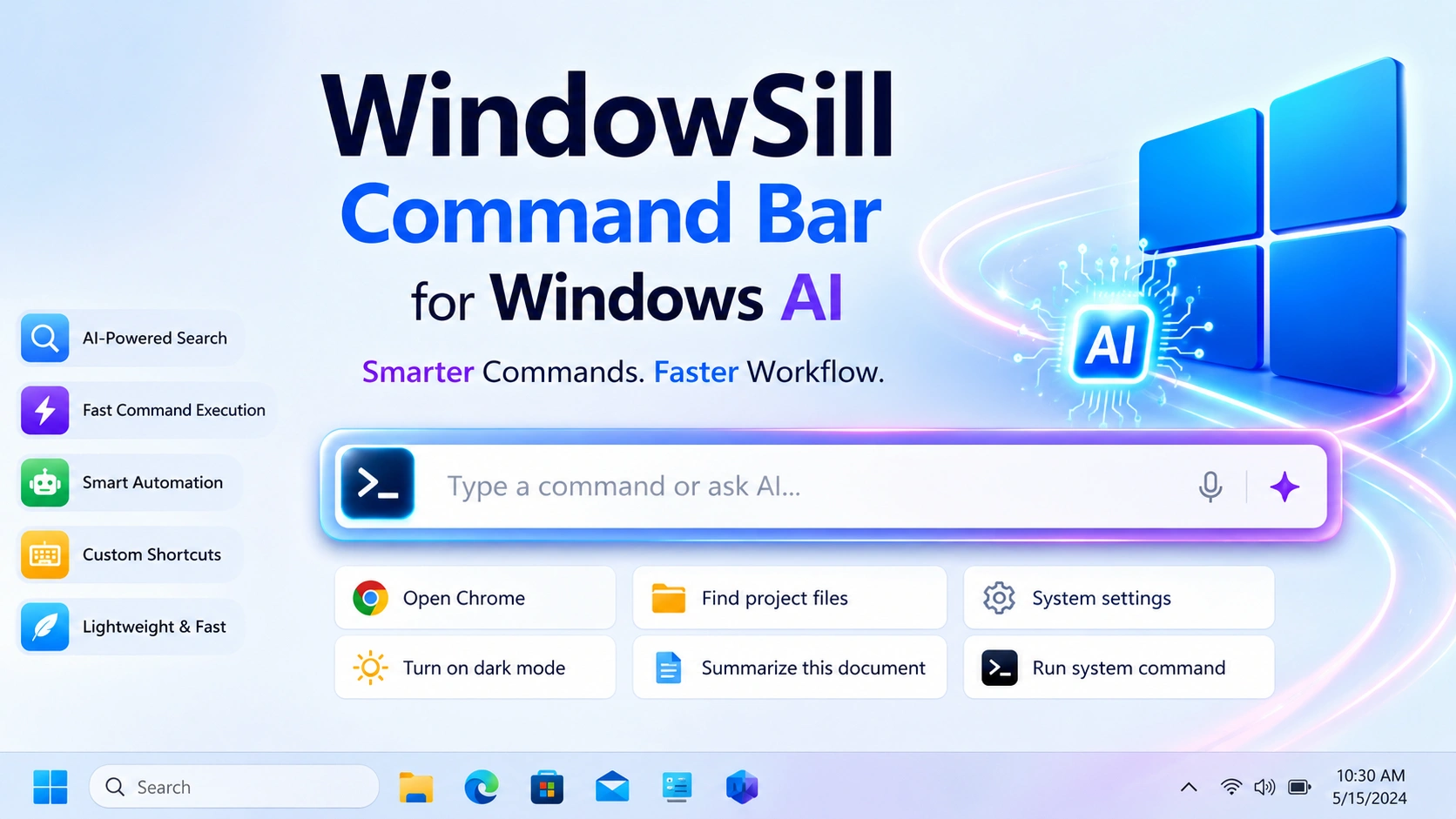
The WindowSill Command Bar for Windows AI is an emerging productivity tool designed to simplify how users interact with the Windows operating system. Instead of navigating menus manually, users can trigger actions, search files, launch apps, and even execute AI-powered commands using a single command bar interface.
The integration with an AI writing assistant such as ChatGPT AI Writing Assistant makes it even more powerful, allowing users to generate text, summarize content, and automate writing tasks directly from the command bar.
This tutorial explains how it works, how to set it up, and how to maximize its potential for daily workflow improvement.
What Is WindowSill Command Bar for Windows AI?
The WindowSill Command Bar for Windows AI is a modern command launcher that integrates artificial intelligence into a centralized command interface on Windows.
It allows users to:
- Launch applications instantly
- Search files and settings
- Run system commands
- Use AI prompts for automation
- Replace multiple Windows shortcuts with one bar
Unlike traditional search tools, this AI-powered command bar understands natural language input.
Key Features of WindowSill Command Bar for Windows AI
1. AI-Powered Search
The system understands user intent rather than exact keywords.
2. Fast Command Execution
You can execute tasks in milliseconds without opening menus.
3. Smart Workflow Automation
Automate repetitive tasks using AI suggestions.
4. Customizable Shortcuts
Users can define their own commands for productivity.
5. Lightweight Interface
Minimal system resource usage ensures smooth performance.
How to Install WindowSill Command Bar for Windows AI
Follow these steps:
- Download the installer from the official distribution source
- Run the setup file as administrator
- Complete installation wizard
- Launch the command bar using the default hotkey (usually Alt + Space)
- Sign in or enable AI features
After setup, the WindowSill Command Bar for Windows AI becomes instantly accessible.
How to Use WindowSill Command Bar for Windows AI
Using the tool is simple:
- Press the shortcut key
- Type your command or question
- Let AI interpret your request
- Execute actions instantly
Example Commands:
- “Open Chrome and search latest news”
- “Find PDF files from last week”
- “Turn on dark mode”
- “Summarize this document”
7 Powerful Tips to Maximize WindowSill Command Bar for Windows AI
1. Use Natural Language Commands
Instead of memorizing shortcuts, type full sentences.
2. Combine Multiple Actions
Example: open app + search + execute in one line.
3. Customize Hotkeys
Set faster access keys for frequent tasks.
4. Use AI for File Organization
Let the system group and rename files automatically.
5. Integrate System Settings
Control Wi-Fi, brightness, and sound directly.
6. Learn Hidden Commands
Explore advanced commands inside settings panel.
7. Keep It Updated
New AI features are often added in updates.
Why WindowSill Command Bar for Windows AI Matters
The WindowSill Command Bar for Windows AI helps users significantly reduce the time spent navigating traditional Windows menus. Instead of opening multiple applications, searching through folders, or clicking through system settings, users can complete tasks instantly through a single, intelligent command interface.
This shift from manual navigation to AI-assisted interaction creates a faster, more streamlined, and more efficient computing experience.
Key Improvements
- Increased productivity through quicker access to apps, tools, and files
- Improved workflow efficiency by reducing repetitive steps
- Enhanced task automation powered by AI-driven commands
- A more consistent and unified user experience across Windows
Tools like Microsoft PowerToys have already introduced useful productivity features for Windows users, including advanced window management, quick launch utilities, and system-level enhancements.
The WindowSill Command Bar for Windows AI expands on this idea by integrating artificial intelligence, allowing interactions to feel more natural, contextual, and intuitive compared to traditional shortcut-based tools.
Common Use Cases
The WindowSill Command Bar for Windows AI can be used across a wide range of everyday scenarios, helping users simplify tasks and improve workflow efficiency.
- Office productivity tasks such as quickly launching applications, managing schedules, and performing fast searches using tools similar to Microsoft Office
- File management automation, including organizing folders, renaming documents, and locating files instantly within Windows File Explorer Windows File Explorer Guide
- Developer workflows for running system commands, executing scripts, and managing projects using tools like Visual Studio Code
- Students organizing study materials, notes, and research files using cloud-based tools such as Microsoft OneNote
- Content creators managing media assets, project folders, and editing workflows with professional software like Adobe Premiere Pro
This flexibility makes the tool useful for both casual users and professionals who want a faster, more streamlined Windows experience.
Keyword Usage Summary
Throughout this article, the focus keyword WindowSill Command Bar for Windows AI has been naturally integrated into key sections such as the title, headings, introduction, features, and usage guide. This helps reinforce topical relevance for search engines while still maintaining readability and user-friendly flow.
Rather than overloading sentences with repetition, the keyword is distributed in contextually meaningful ways—supporting SEO performance without harming the reading experience.
Final Thoughts
The WindowSill Command Bar for Windows AI represents a meaningful shift in how users interact with Windows systems. Instead of relying on traditional menus, shortcuts, and manual navigation, users can now perform actions through a unified AI-powered command interface.
This approach reduces friction in everyday computing tasks, improves productivity, and creates a more intuitive workflow experience. As AI continues to evolve, tools like this will likely become a core part of how operating systems are used—making Windows faster, smarter, and more adaptive to user needs.